How Northwest Arkansas Weather Wears Down Exterior Paint
Our weather is tough on a painted house, and the signs of trouble show up long before the wood does.
October 1, 2026 · 4 min read
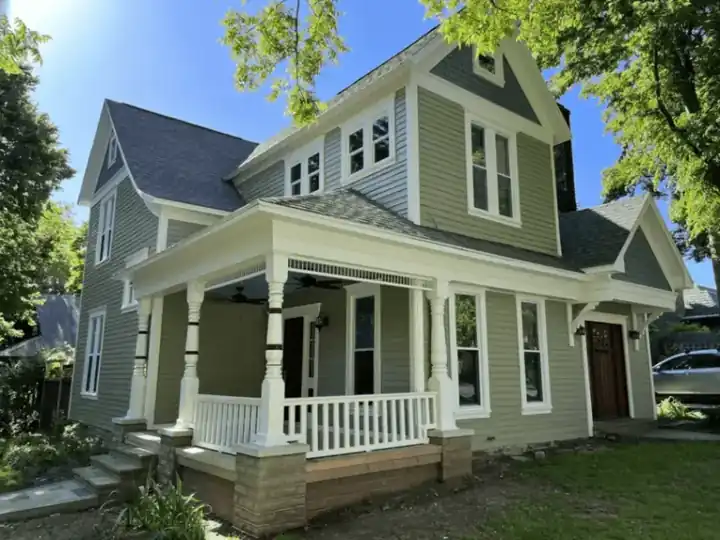
A coat of exterior paint has one job: keep the weather out of your house. In Northwest Arkansas that is a real job. We get hot summers, damp springs, heavy rain that can arrive sideways, and the occasional storm that throws hail and debris at everything. Paint that looked perfect on the day the crew left slowly gives ground to all of it. Knowing how that happens helps you spot trouble early, while a repaint is still a repaint and not a repair project.
What the summer sun does
Sun is the quiet one. Ultraviolet light breaks down the binder that holds paint together, and the first sign is usually fading. Deep colors and bold doors go first. On the south and west sides of a house, where the afternoon sun lands hardest, you may see the color go flat and dull while the north side still looks fresh.
If you run your hand across the siding and it comes away with a chalky powder on your palm, the surface is breaking down. Chalking is not an emergency, but it tells you the paint is nearing the end of its useful life. Paint also expands and contracts as boards heat up in the day and cool at night. Over a few years, that movement can open hairline cracks, especially at corners, window trim and anywhere two materials meet.
Humidity, rain and trapped moisture
Moisture does the most damage, and it does it from the inside out. Water gets in through a cracked caulk line, a gap at the bottom of a board, a worn spot near a gutter, or a place where paint has already started to peel. Once it is behind the film, it pushes outward. That is why you see blisters, bubbles and peeling in sheets rather than in small chips.
Humid air does a similar thing more slowly. Shaded north walls, areas under trees and spots near downspouts stay damp longer and grow mildew and algae. Those green or black patches are not just ugly. They hold moisture against the surface and make the paint underneath weaker. Washing them off is part of the job when a house is repainted, because new paint does not stick well to a dirty, damp surface.
Storms and the damage you can miss
After a bad storm, walk around your house and look up. Hail can chip paint and leave small dents in wood trim. Wind can drive rain under siding laps and around window frames. A limb that scraped the wall may have taken a strip of paint with it. Any bare spot is an open door for water, so it is worth fixing even if the rest of the wall looks fine.
Signs it is time to repaint
You do not need a calendar to know when to repaint. The house will tell you. These are the signs we would look for:
- Chalky residue that rubs off on your hand
- Cracking or peeling, especially at corners, trim and window sills
- Caulk that has pulled away or split
- Bare wood showing anywhere
- Mildew that comes back soon after you wash it
- Color that has faded unevenly from one side of the house to the other
Soft or spongy wood is a different matter. If a screwdriver tip sinks into a trim board, that board has rot and needs to be replaced, not just painted. Painting over it hides the problem for a season and then lets it spread.
Repaint before it fails, not after
There is a real difference between repainting a house with worn paint and repainting one with peeling paint. Worn paint can usually be washed, spot primed and recoated. Peeling paint has to be scraped back to a sound edge first, and any wood that has been wet for a long time may need repair. The longer you wait, the more of the work shifts from painting to fixing.
The weather also decides when the work happens. Paint needs dry surfaces and reasonable conditions to cure properly. A good crew watches the forecast, moves around the house to follow the sun and shade, and does not push a coat onto a wet wall just to stay on schedule. Rain delays are normal here, especially in spring. If a painter promises never to be delayed by weather in Arkansas, be careful.
What a good estimate looks at
When a painter walks your house for an estimate, they should be reading all of the above. At Schneider Painting, our exterior work covers siding, trim and doors, and the goal is to protect your home from harsh weather, not only to make it look good. Part of that is examining the surface for damage or problems before any paint goes on, so surprises get found at the start rather than halfway through the job. We use paints that are low in VOCs whenever possible.
The process is simple. You call, and our office manager schedules a free in-home estimate with the goal of being at your house within 2 to 3 business days. Within two days of that visit, you get a detailed estimate by email. When the job is finished we do a final walk-through with you, and every project carries our one-year craftsmanship warranty.
If your paint is chalking, cracking or peeling and you want a straight answer about where your house stands, read more about our work at /services/exterior-painting or call us at (479) 283-3138. We serve Springdale, Rogers, Bentonville, Fayetteville and Bella Vista.
Schneider Painting, (479) 283-3138
Call (479) 283-3138More articles
What Good Exterior Prep Looks Like Before a Repaint
The prep is the part you will never see in the finished house, and it is the part that decides how long the paint lasts.
Living in Your House While It Gets Repainted: What to Expect
An interior repaint does not have to mean living in chaos, and a little planning makes the days go smoothly.