What Good Exterior Prep Looks Like Before a Repaint
The prep is the part you will never see in the finished house, and it is the part that decides how long the paint lasts.
October 1, 2026 · 4 min read
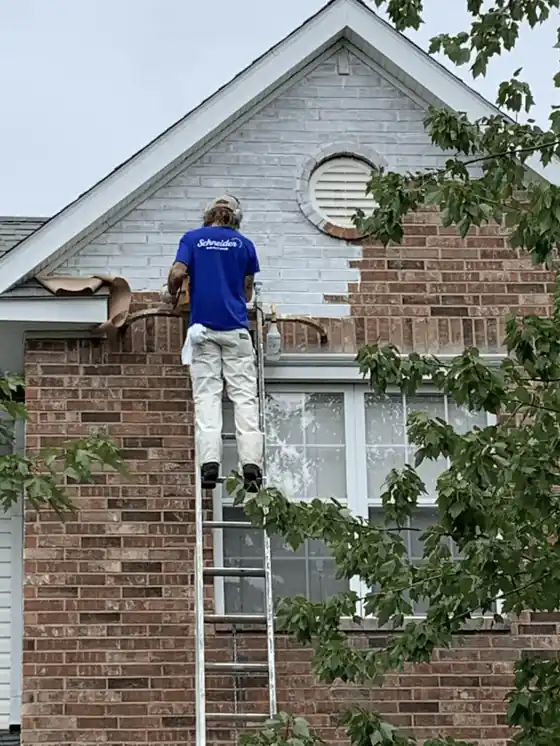
Ask a painter what makes an exterior job last and the honest answer is usually the same: preparation. Paint is a thin film. It can only be as good as the surface it is stuck to. If it goes over dirt, loose paint or damp wood, it will let go sooner or later, no matter how good the paint in the can was.
That also makes prep the easiest place for a careless contractor to cut corners, because once the finish coat is on, nobody can see what happened underneath. Here is what good prep looks like, so you know what to expect and what to ask about.
Start with a look, not a brush
Before anything gets washed or scraped, someone should walk the house and look closely. They are checking for peeling areas, cracked caulk, bare wood, soft boards, mildew and anything else that will affect the job. At Schneider Painting, our exterior work begins with examining the surface for damage or problems before painting. Finding a rotted board at the estimate is far better than finding it on day three.
Washing the house
Siding collects dust, pollen, mildew and the film of grime that settles on every outdoor surface. Paint does not bond well to any of it. A thorough wash removes that layer, and for mold and mildew it is not optional. If mildew is painted over without being treated, it tends to come right back through the new coat.
The house then needs time to dry before anyone paints. Rushing paint onto damp siding is one of the most common ways to end up with blisters later. A careful crew will wait, even when it costs a day.
Scraping and sanding
Any paint that is loose, flaking or bubbled has to come off. If you paint over a flaking area, the new coat just rides on top of the old failure and peels along with it. The goal is to scrape back until what is left is firmly attached, then sand the edges so there is a smooth transition. Otherwise you can see the outline of every scraped patch through the finish.
Glossy or hard old surfaces, such as a previously painted door, are sanded lightly so the new coat has something to grip.
Caulking and trim repair
Caulk fills the gaps where boards, trim and window frames meet. Over the years it dries out, shrinks and pulls away, and that is exactly where water gets in. Cracked or missing caulk should be removed or replaced before painting, and it should be done before the finish coat so the caulk line is sealed under paint rather than sitting on top of it.
Then there is rot. Wood that is soft, crumbly or spongy will not hold paint, and covering it only hides the damage. Small spots can sometimes be repaired with filler made for exterior wood. A board that is truly rotted should be replaced. A good painter will point these out and tell you plainly which is which, so you can decide with real information.
Priming where it matters
Primer is not an extra coat for the sake of it. Bare wood, patched areas and spots where paint was scraped to the surface all need primer so the finish coat soaks in evenly and bonds. Without it, those spots can look patchy or dull, and they tend to fail first. Primer also helps when you are making a big color change, since it keeps the old color from showing through.
Protecting what is around the house
Prep is not only about the walls. It is also about the shrubs, flower beds, patio furniture, windows, light fixtures, doors and landscaping around them. Plants get covered or tied back, furniture gets moved or wrapped, and anything that should not get paint on it gets masked. Our process promises that we will respect and protect your home and belongings while we work, and we communicate our timeline along the way so you are never guessing.
Questions worth asking any painter
- How will you deal with mildew and loose paint?
- How do you handle caulking and wood that has rot?
- Which areas will be primed?
- How do you protect my plants and belongings?
- What happens if you find damage after you start?
If the answers are vague, that tells you something. Prep takes time, and a painter who has planned for it will not mind explaining it.
The finish you get to keep
When the work is done, we clean up and do a final walk-through with you to make sure you are happy. Every project also comes with our one-year craftsmanship warranty, and we use paints that are low in VOCs whenever possible.
If you are planning an exterior repaint and want to see how we would approach your house, see /services/exterior-painting or call (479) 283-3138 to set up a free in-home estimate.
Schneider Painting, (479) 283-3138
Call (479) 283-3138More articles
How Northwest Arkansas Weather Wears Down Exterior Paint
Our weather is tough on a painted house, and the signs of trouble show up long before the wood does.
Living in Your House While It Gets Repainted: What to Expect
An interior repaint does not have to mean living in chaos, and a little planning makes the days go smoothly.